Author: Duncan Adams
Date: May 19, 2023
Published By: The Montana Standard
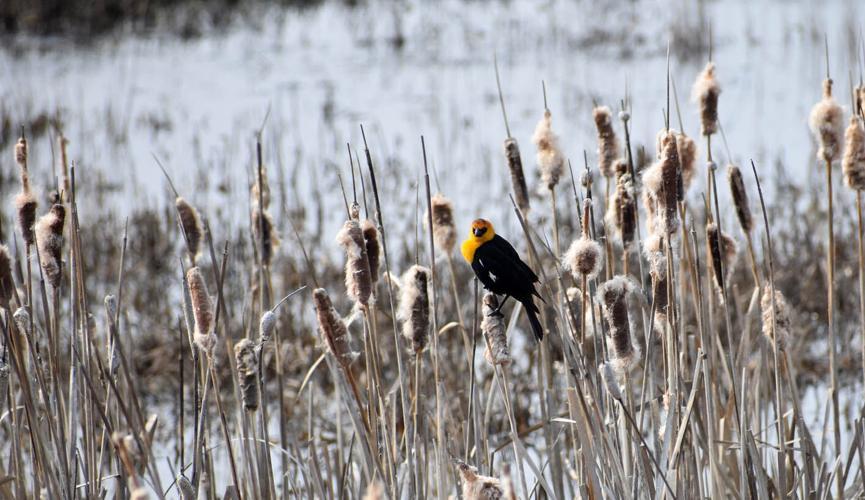
Wetlands near Silver Bow Creek teemed Thursday morning with bird life, including this yellow-headed blackbird. Duncan Adams, The Montana Standard
They had wings but nary a prayer.
For a century, waterfowl avoided Silver Bow Creek like the plague that it was.
But on the heels of Superfund-related cleanup and restoration of historic mining and smelting wastes, both Silver Bow Creek and waterfowl are back in the game downstream from Butte.
Mallards, scaups, ruddy ducks, wood ducks, Canadian geese, snow geese, swans and many more can be seen there now.
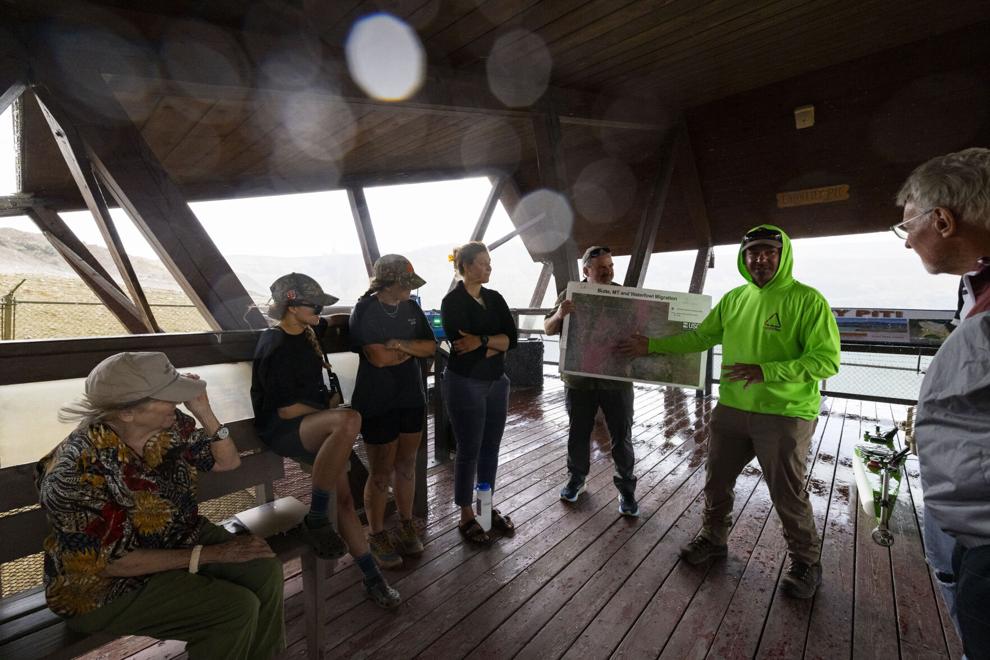
On Thursday, a school bus delivered about 50 fifth-graders from Margaret Leary Elementary School in Butte to the Silver Bow Station along the Silver Bow Creek Greenway. They came to learn about the vital role wetlands play in healthy ecosystems, about water quality and about waterfowl.
They learned that just about every predator, including Homo sapiens, enjoys a meal of duck from time to time.
Ducks and geese typically don’t stir the same public fervor in Montana as big game or trout, which have also returned to Silver Bow Creek downstream from Butte.
Enter Montana Wetlands and Waterfowl, based in Butte and young enough to be considered a fledgling.
Mark Mariano, a restoration ecologist, co-founded the organization in November with Bailey Tasker, a biologist with a master’s degree in ecological restoration.
“The return of waterfowl to the Upper Clark Fork-Butte area after Superfund cleanup was one of the first positive responses to the restoration efforts but is going largely unnoticed,” Mariano said.
“We are trying to bring attention to the amazing ducks and geese that live, migrate through and nest here,” he said. “This is so cool what is happening around here in these areas that used to be devoid of life.”
As the students arrived, a few waterfowl species including ruddy ducks, decided to wing away from all that energy. But mallards and a pair of scaups lingered in a wetlands where Montana Wetlands and Waterfowl had installed a duck nesting tube atop a pole.
Mariano told the students he hoped one of the pairs would choose to nest in the tube, which can help protect the birds and their offspring from predators. And, once hatched, the baby ducks can avoid the “Make Way for Ducklings” dilemma and drop straight from the nest into the water.
He said the structures have been shown to increase the success rate for nesting ducks by up to 80%.
Mariano said Montana Wetlands and Waterfowl has installed 30 nesting tubes in the region. He said at least two host hens on the nest.
Students asked a host of questions during their time with Mariano, Tasker, Mary Sutherland and Joe Griffin.
Student Tyler Christenson said past practices that considered wetlands wasted land were misguided.
“Because wetlands have a bunch of wildlife and they’re important to the ecosystem,” he said. One student briefly stumped Mariano.
He wanted to know who was at fault if a vehicle ran over a duck in the road. Mariano said it would likely depend on the circumstances.
He said Montana Wetlands and Waterfowl has reached hundreds of students already this year with educational workshops.
“We hope that these trips will instill a sense of the importance of the local ecosystem, and an understanding of how the cleanup and restoration created wildlife habitat,” he said. “We hope the kids will be able to see a hen nesting in the structures they built and, later, watch for baby ducklings from those nests.”